Especially important in the argument of the letter (Galatians) is the idea of incorporation into Christ. God promised to bless the nations “in” Abraham (3:8), and that blessing is now given to all who belong to Christ (3:14) because he is the (singular!) “seed” of Abraham (3:16). So, Paul concludes in the climax of his theological argument, “in Christ Jesus you are all children of God through faith” (3:26). Incorporation into Christ is a fundamental theological concept in the letter (as it is in Paul’s theology generally). It is the theological center from which the various lines of Paul’s theological reasoning radiate. Those who are “ in Christ” enjoy the “blessing of Abraham,” in the context of justification (3:14); and “those who belong to Christ Jesus have crucified the flesh with its passions and desires” (5:24). Thus both justification and sanctification are given believers via their union with Christ—the “double gift” that Calvin is especially concerned to emphasize.”
P. T. Forsyth used to insist that prayerlessness is the root of all sin. When we do not give time each day to earnest and believing prayer, we are saying that we can cope with life without divine aid. It is human arrogance at its worst. Jesus knew that he had to pray and did so, gladly, necessarily and effectively. To be prayerless is to be guilty of the worst form of practical atheism. We are saying that we believe in God but we can do without him. It makes us careless about our former sins and heedless of our immediate needs. This letter (book of Hebrews) urges us to come into the presence of a God who welcomes us and a Christ who understands us. To neglect the place of prayer is to rob ourselves of immense and timely resources. To the Christian the throne of grace is the place of help.
At the epicenter of the gospel we encounter God’s own chaos narrative summarized in Paul’s phrase, the “word of the cross” (1 Cor. 1:18). As a preacher, Paul worried that too much eloquence — we might say, too many good stories — would detract from his message and rob the divine chaos of its power (1 Cor. 1:17). To the evangelists and Paul, the chaos does not represent a sidebar or a footnote to the main story. For an awful moment it rules, as in Jesus’ cry of dereliction, “My God, my God, why have you forsaken me?” Each story in the Gospels artfully portrays someone’s battle with the very same forces of dissolution. It was chaos in the fishing boat on the Sea of Galilee It was chaos when the little boy was having convulsions at the feet of Jesus. It was chaos in Gethsemane when “his sweat became like great drops of blood.”
It is important to let people know that God has taken up the “narrative wreckage” of our lives into God’s own history, because many people think of the Christian story as a simple restitution narrative. They send money to preachers who promise to fix everything that is broken, from salvation to self-esteem.
Throughout His ministry Jesus made predictions that He would be delivered up to His enemies and be killed. He also said that on the third day He would rise again. The Gospels tell us that is exactly what happened. They recount with solemn emphasis the story of the crucifixion and then the joy of the first Easter morning. Someone has said that the resurrection of Jesus is the best attested fact of ancient history. Whether this can be substantiated or not I do not know, but certainly the evidence is very impressive. When you consider the fact of the empty tomb, the impossibility of friends stealing the body (why should they and how could they, when the tomb was guarded?), and the impossibility of foes stealing it (why should they and if they did, why did they not produce the body when the resurrection began to be proclaimed?), the transformation of the disciples that the resurrection brought about, the nature and the number of the resurrection appearances of our Lord, it is certainly difficult to deny that the resurrection is a fact. But if Jesus could predict that He would die and that He would rise again, and then fulfil His prediction to the letter this adds another item to our mounting list of evidence which indicates that He was more than merely human. No-one who was only a man could do that. We have only to contemplate our own death to see the force of the point. The resurrection points unmistakably to the deity of Christ. by: Leon Morris
Jesus Christ is Lord. That is the first and final assertion Christians make about all of reality, including politics. Believers now assert by faith what one day will be manifest to the sight of all: every earthly sovereignty is subordinate to the sovereignty of Jesus Christ. The Church is the bearer of that claim. Because the Church is pledged to the Kingdom proclaimed by Jesus, it must maintain a critical distance from all the kingdoms of the world, whether actual or proposed. Christians betray their Lord if, in theory or practice, they equate the Kingdom of God with any political, social or economic order of this passing time. At best, such orders permit the proclamation of the gospel of the Kingdom and approximate, in small part, the freedom, peace, and justice for which we hope. by: Richard John Neuhaus in the 1981 founding statement of the Institute on Religion and Democracy
Ongoing Tensions
It was confusing to grow up singing both “This World is not my Home” and “This is my Father’s World.” Those hymns embody two common and seemingly contradictory Christian responses to culture. One sees this world as a wasteland of godlessness, with which the Christian Should have as little as possible to do. The other regards cultural transformation as virtually identical to “kingdom activity.” by: Michael Horton
These are recollections of my life when I was a beast and ate grass, which I, Nebuchadnezzar, make known to all people and to every tongue.
Was not Babel the great city, the greatest of all the cities of the world? I, Nebuchadnezzar, built it. No city was so renowned as Babel, and no king so renowned through Babel, the glory of my majesty. My royal house was visible unto the ends of the earth, and my wisdom was like a dark riddle which no one could explain. So no one could interpret my dreams.
And the word came to me that for seven years I should be transformed and become like a beast that eats the grass of the field. And I heard a voice that came suddenly, and I was transformed as quickly as a woman changes color. Grass was my food, and dew fell upon me, and no one knew who I was. But I knew Babel and cried out, “Is not this Babel?” But no one paid attention to my word, for when I spoke I sounded like a bellowing beast. My thoughts terrified me, for my mouth was bound, and no one could grasp a thing I said. And I thought to myself: Who is this Mighty One whose wisdom is like the darkness of the night, and like the deep sea unfathomable? No one knows where the Almighty resides, no one can point and say, “Behold, here is his throne.” For he does not dwell on the confines of my kingdom as does my neighbor. And neither does he dwell in his temple, for I, I, Nebuchadnezzar, have taken his vessels of gold and silver, and have leveled his temple to ruins.
No one knows anything of him. Who is his father, and how did he came to acquire his power, and who taught him the secret of his might? He has no advisers from whom one might buy his secret for gold; no one to whom he says, “What shall I do?” and no one who says to him,”What are you doing?” He does not have spies who wait for the opportunity when one might catch him; for he does not say, “Tomorrow,” he says, “today.” He makes no preparations like a man, and his preparations give the enemy no rest, for he says, “let it be done,” and it comes to pass.
It is he who has done this to me. He does not aim like the bowman, so that one can flee from his arrow; no, he speaks and it is done. In his hand, the brain of kings is like wax in the smelting oven, and their power is like a feather when he weighs it. And yet he does not dwell on earth that he might take Babel from me and leave me a small residue, or that he might take away everything from me in order to be the Mighty One In Babel.
This is how I thought in the secrecy of my mind, when no one recognized me and when my thoughts terrified me. This is how I thought of the Lord. But the seven years passed by and I became once again Nebuchadnezzar, and I called together all the wise men to see if they could explain to me the secret of that power, and how it was I had become a beast of the field. And they all fell down upon their faces and said, “Great Nebuchadnezzar, this is but a vision, an evil dream! Who could be capable of doing this to you?” But my wrath was kindled against them, and I had them put away for their folly. For the Lord possesses all might, as no human being possesses it, and I will not envy his power, but will laud it.
Babel has ceased to be the renowned Babel, and I, Nebuchadnezzar, am no longer Nebuchadnezzar, and my armies no longer protect me, for no one can see the Lord and no one can recognize him. Even if he were to come, the watchmen would give warning in vain, because I have already become like a bird in the tree, or like a fish in the water, known only to the other fish.
I no longer desire to be renowned through Babel, but every seventh year there shall be a festival in the land, a great festival among the peope, and it shall be called the Feast of the Transformation. And an astrologer shall be led through the streets and be dressed like a beast, and he shall carry with him his calculations, torn to shreds like a bunch of hay. And all the people shall cry, “The Lord, the Lord, is the Mighty One. His deed is swift like the leap of the great fish in the sea.”
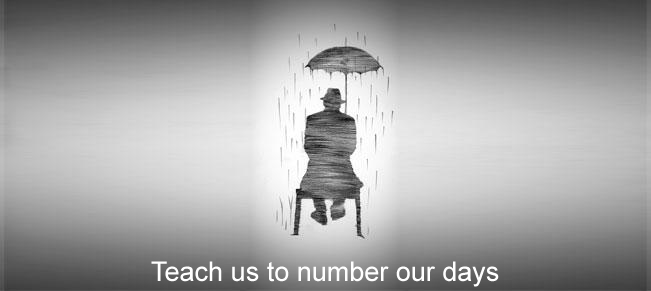
My days have been numbered, and my dominion has gone like a watch in the night. I do not know where to go-whether it is to the invisible land in the distance where the Mighty One lives, that I might find grace in his eyes, or whether he will take the breath of life from me, so that I become like a cast-off garment like my predcessors, that he might find delight in me.
I, I, Nebuchadnezzar, have made this known to all people and to every tongue, and great Babel shall carry out my will.
GOD, grant me the serenity to accept the things I cannot change,
Courage to change the things I can, and the wisdom to know the difference.
Living one day at a time; Enjoying one moment at a time; Accepting hardship as the pathway to peace.
Taking, as He did, this sinful world as it is, not as I would have it.
Trusting that He will make all things right if I surrender to His Will;
That I may be reasonably happy in this life, and supremely happy with Him forever in the next.
Amen
NOTE: This is the full Serenity Prayer attributed to Rev. Karl Paul Reinhold Niebuhr (1892-1971). It was reportedly written by him in 1926. Niebuhr was a Lutheran pastor and theologian. Usually his “Serenity Prayer” is quoted using the first 2 verses only.
Edmund Dulac (1882-1953) ‘The Entomologist’s Dream’
“The longer I live, the more I realize the impact of attitude on life. Attitude, to me, is more important than facts. It is more important than the past, than education, than money, than circumstances, than failures, than successes, than what other people think or say or do. It is more important than appearance, giftedness or skill. It will make or break a company… a church… a home.
The remarkable thing is that we have a choice every day regarding the attitude we will embrace for that day. We cannot change our past… we cannot change the fact that people will act in a certain way. We cannot change the inevitable. The only thing we can do is play on the one string we have, and that is our attitude. I am convinced that life is 10% what happens to me and 90% how I react to it. And so it is with you… we are in charge of our ATTITUDES!”
Without the gospel everything is useless and vain; without the gospel we are not Christians; without the gospel all riches is poverty, all wisdom folly before God; strength is weakness, and all the justice of man is under the condemnation of God.
But by the knowledge of the gospel we are made children of God, brothers of Jesus Christ, fellow townsmen with the saints, citizens of the Kingdom of Heaven, heirs of God with Jesus Christ, by whom the poor are made rich, the weak strong, the fools wise, the sinner justified, the desolate comforted, the doubting sure, and slaves free. It is the power of God for the salvation of all those who believe.
It follows that every good thing we could think or desire is to be found in this same Jesus Christ alone. For, he was sold, to buy us back; captive, to deliver us; condemned, to absolve us; he was made a curse for our blessing, sin offering for our righteousness; marred that we may be made fair; he died for our life; so that by him fury is made gentle, wrath appeased, darkness turned into light, fear reassured, despisal despised, debt canceled, labor lightened, sadness made merry, misfortune made fortunate, difficulty easy, disorder ordered, division united, ignominy ennobled, rebellion subjected, intimidation intimidated, ambush uncovered, assaults assailed, force forced back, combat combated, war warred against, vengeance avenged, torment tormented, damnation damned, the abyss sunk into the abyss, hell transfixed, death dead, mortality made immortal.
In short, mercy has swallowed up all misery, and goodness all misfortune. For all these things which were to be the weapons of the devil in his battle against us, and the sting of death to pierce us, are turned for us into exercises which we can turn to our profit. If we are able to boast with the apostle, saying, O hell, where is thy victory? O death, where is thy sting? it is because by the Spirit of Christ promised to the elect, we live no longer, but Christ lives in us; and we are by the same Spirit seated among those who are in heaven, so that for us the world is no more, even while our conversation is in it; but we are content in all things, whether country, place, condition, clothing, meat, and all such things…And we are comforted in tribulation, joyful in sorrow, glorying under vituperation, abounding in poverty, warmed in our nakedness, patient amongst evils,living in death.
This is what we should in short seek in the whole of Scripture: truly to know Jesus Christ, and the infinite riches that are comprised in him and are offered to us by him from God the Father.
John Calvin’s preface to Pierre Robert Olivétan’s French translation of the New Testament (1534).
In the Pentateuch, Abraham’s journey to Mount Moriah and his sacrificial worship there foreshadow Israel’s worship at Mount Sinai. After his three day journey and his tremendous willingness to obediently sacrifice his son. Abraham is the first to offer without reservation a ram on Mount Moriah as an act of worship. Later, the Israelite want a three-day journey into the desert to worship God, presumably upon the mountain of God. There the Lord appears to them, gives them the law, and promises a blessing to those who will keep the law. Every Israelite father redeems his firstborn son by an animal substitute, just as the angel of the Lord spared the firstborn by the Passover substitute.
Within the canon of Scripture, the story of Abraham’s willingness to obediently sacrifice his son of promise typifies Christ’s sacrifice. Abraham’s declaration that “God himself will provide the lamb” resonates with God’s offer of the Lamb to save the world. God’s provision of the ram on Mount Moriah typifies his sacrifice of Jesus Christ. Ultimately God provides the true Lamb without blemish that stands in humanity’s place. This Lamb of God dies instead of the elect so that they might live.
The obedience of Isaac and Abraham is a type of the Son of God, The true suffering Servant. Like Isaac, Christ is a lamb led to the slaughter, yet he does not open his mouth. Just as Isaac carries his own wood for the altar up the steep mount, Christ carries his own wooden cross toward Golgotha. Just as Abraham sacrificially and obediently lays Isaac on the altar, so Christ sacrificially and obediently submits to his father’s will. Abraham’s devotion (“You have not withheld from me your son, your only son”) is paralleled by God’s love to us in Christ as reflected in John3:16 and Rom. 8:32, which may allude to this verse,. Symbolically, Abraham receives Isaac back from death, which typifies Christ’s resurrection from the death of the cross. In taking and oath to bless Abraham and all nations through him, God guarantees the promise to Abraham’s offspring. Abraham’s obedience prefigures the active obedience of Christ, who secures the convenantal blessings for Abraham’s innumerable offspring.





 mclainbill.com